
Learn how Dry Pipe Fire Sprinkler Systems work, their benefits, installation process, and uses in cold storage warehouses.
Introduction
A Dry Pipe Fire Sprinkler System is a specialized fire protection solution design for environments where traditional water filled systems may not be suitable. Unlike wet pipe systems dry pipe systems use pressurized air or nitrogen inside the pipes instead of water. This makes them ideal for cold environments where freezing temperatures could damage a wet system.
In commercial and industrial buildings fire safety is not optional, it is essential. Understanding how a dry pipe system works and where it should be installed can help property owners make informed safety decisions.
What is a Dry Pipe Fire Sprinkler System?
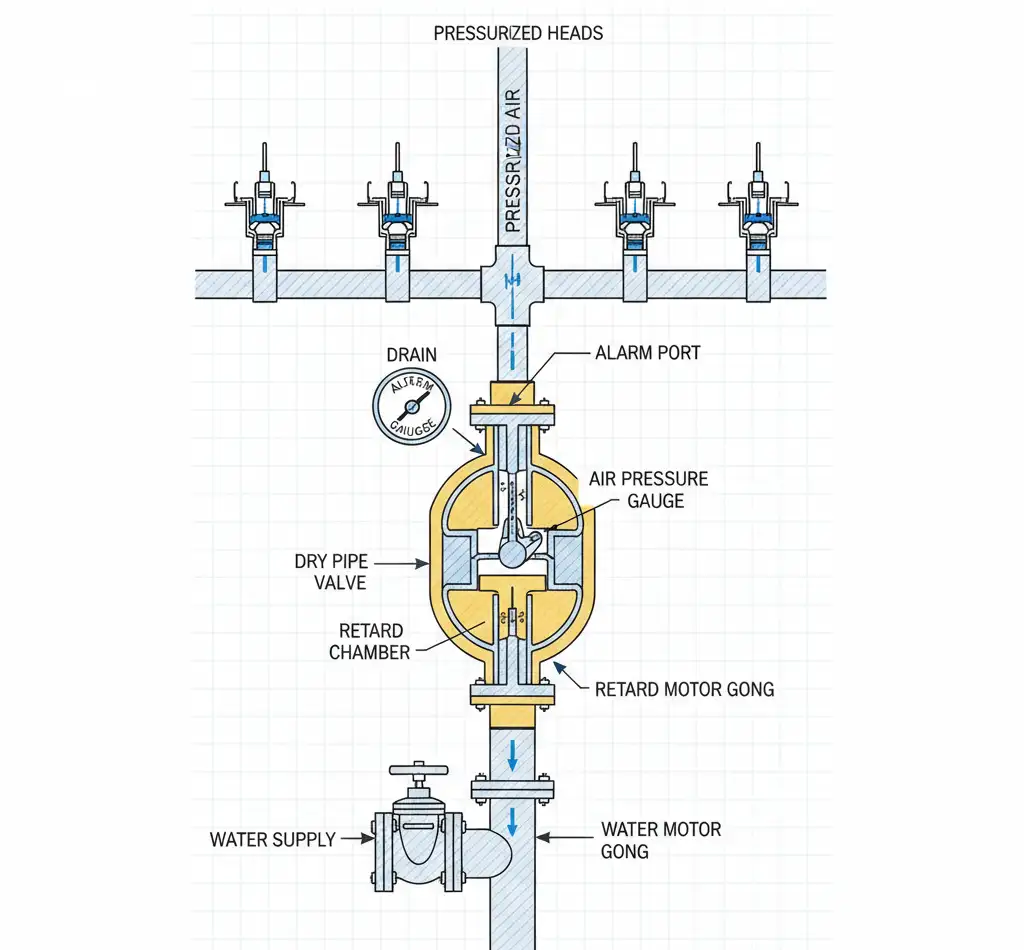
A Dry Pipe Fire Sprinkler System is a fire suppression system where the sprinkler pipes are fill with compress air nitrogen rather than water. The water supply is held back by a special dry pipe valve.
When a fire occurs the heat activates a sprinkler head. This releases the compressed air first which then allows the valve to open and water to flow into the piping system and discharge onto the fire.
This design prevents water from sitting inside pipes making it suitable for low temperature environments.
How Does a Dry Pipe Fire Sprinkler System Work?
The working process of a dry pipe system can be explained in simple steps
- The sprinkler pipes are filled with pressurized air or nitrogen.
- A dry pipe valve separates the air filled pipes from the water supply.
- When a fire generates enough heat the sprinkler head nearest to the fire activates.
- The compressed air escapes from the system.
- The drop in air pressure triggers the dry pipe valve to open.
- Water flows into the pipes and is discharged through the activated sprinkler head.
There is slight delay compared to wet pipe systems because the air must be released before water flows. However this delay is typically minimal within safety standards.
Where Are Dry Pipe Fire Sprinkler Systems Used?
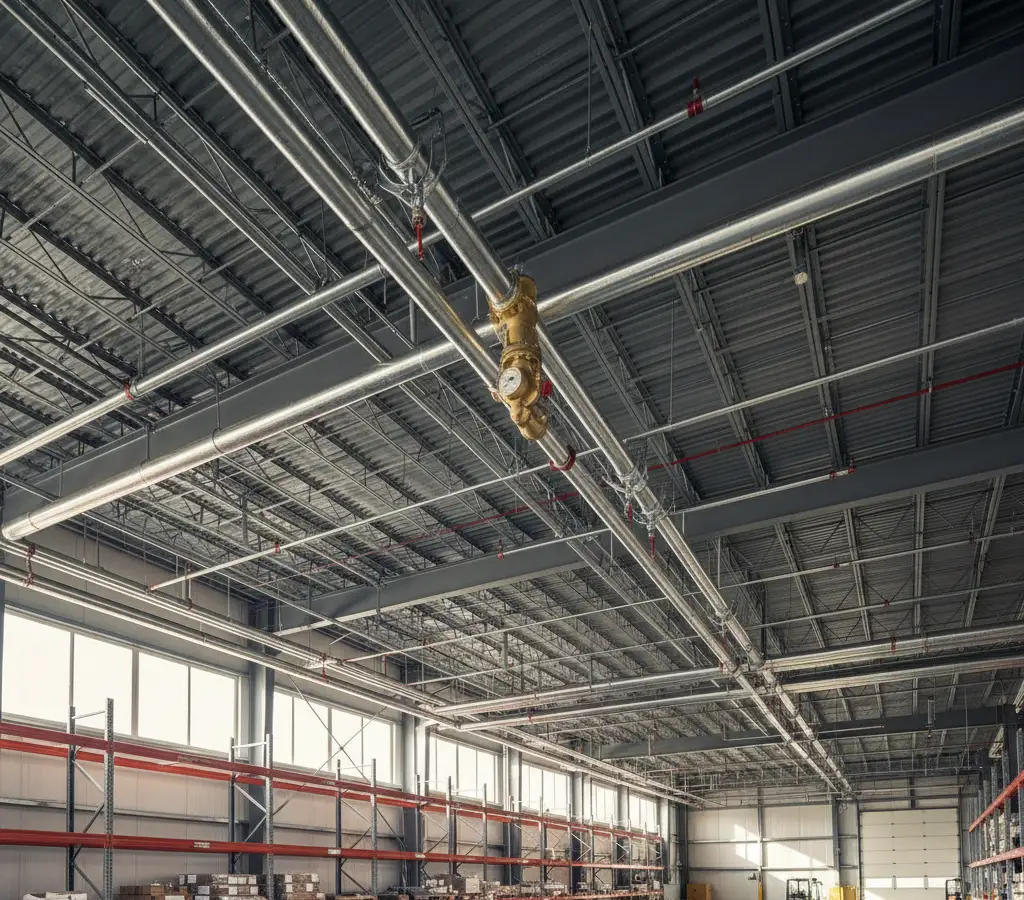
A Dry Pipe Fire Sprinkler System is commonly installed in areas where freezing is a concern. These include
- Cold storage facilities
- Warehouses
- Car parks
- Loading docks
- Unheated industrial buildings
- Refrigerated storage areas
In regions where certain spaces are not temperature-controlled, dry pipe systems provide reliable protection without the risk of pipe bursts caused by frozen water.
Advantage of Dry Pipe Fire Sprinkler System
1. Protection Against Freezing
The biggest advantage is that water is not stored in the pipes. This prevents freezing and pipe damage in cold environments.
2. Reduced Risk of Pipe Bursting
Since the pipes contain air, there is no expansion of frozen water, reducing structural damage risk.
3. Reliable Fire Protection
Dry pipe systems meet fire safety regulations and provide effective suppression in appropriate environments.
4. Suitable for Industrial Applications
These systems are widely accepted in industrial and commercial projects where environmental conditions vary.
Disadvantages to Consider
While effective, dry pipe systems also have some limitations:
- Slight delay in water discharge
- Higher installation cost compared to wet pipe systems
- More complex maintenance requirements
- Larger system design considerations
Because of these factors professional design and installation are critical to ensure system efficiency and compliance.
Installation Process of a Dry Pipe Fire Sprinkler System
The installation of a Dry Pipe Fire Sprinkler System requires careful planning and compliance with fire safety regulations. The process typically includes:
- Site assessment and hazard classification
- System design according to building layout
- Installation of piping network
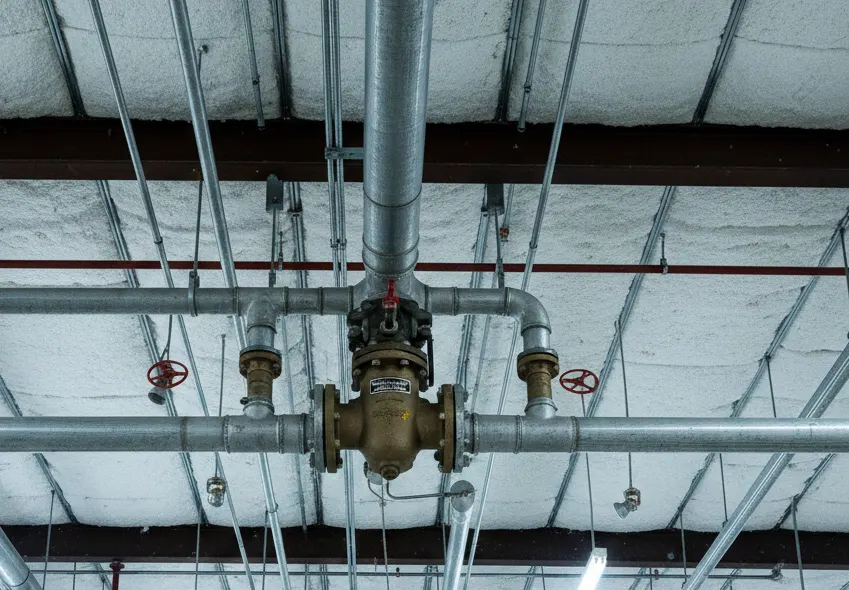
- Installation of dry pipe valve and air compressor
- Connection to water supply
- Pressure testing and inspection
- Certification and approval (if required by local authorities)
Professional contractors ensure the system complies with local fire codes and standards to guarantee safety and reliability.
Maintenance and Inspection
Regular inspection and maintenance are essential for system performance. Key maintenance steps include:
- Checking air pressure levels
- Inspecting dry pipe valves
- Testing alarm systems
- Ensuring no corrosion or leakage
- Conducting periodic system testing
Proper maintenance ensures fast activation during emergencies and extends the lifespan of the system.
Dry Pipe vs Wet Pipe Fire Sprinkler System
| Feature | Dry Pipe System | Wet Pipe System |
| Pipes Filled With | Air/Nitrogen | Water |
| Best For | Cold environments | Heated buildings |
| Response Time | Slight delay | Immediate |
| Maintenance | Moderate to high | Low |
Choosing the right system depends on environmental conditions and building requirements.
Frequently Asked Questions
What is the main purpose of a Dry Pipe Fire Sprinkler System?
The main purpose is to prevent water from freezing inside sprinkler pipes in cold or unheated environments while still providing effective fire protection.
Is a Dry Pipe Fire Sprinkler System more expensive?
Yes, it is generally more expensive than a wet pipe system due to additional components such as air compressors and specialized valves.
How long is the delay in water discharge?
The delay is usually only a few seconds, which falls within acceptable fire safety standards.
Can dry pipe systems be used in residential buildings?
They are typically used in commercial or industrial buildings, but may be installed in specific residential areas exposed to freezing temperatures.
Conclusion
A Dry Pipe Fire Sprinkler System is an essential fire protection solution for cold and unheated environments. While it involves a slightly more complex installation and maintenance process it offers reliable safety where traditional wet systems may fail.
For commercial buildings, warehouses and industrial facilities choosing the right fire protection system is critical. Working with experienced fire protection professionals ensures compliance, efficiency and long-term reliability.